In the world of IT, there are few things more fundamental—yet often overlooked—than DNS (Domain Name System) management. It’s the silent backbone of your online presence, enabling users to reach your website, send you emails, and connect to your cloud services.
And yet, many businesses have no direct access to their DNS settings, often because it’s been handled entirely by a web developer, isn’t a part of the service you are paying for, or is in the hands of a long-forgotten third-party registrar or past employee. This might not seem like a big deal—until something goes wrong.
Here’s why it’s critical that your business has access to its DNS and understands what that access enables.
Note for transparency: GroupSupport manage the DNS records for many clients, and also work with other DNS holders on behalf of many other clients.
What Is DNS, and Why Does It Matter?
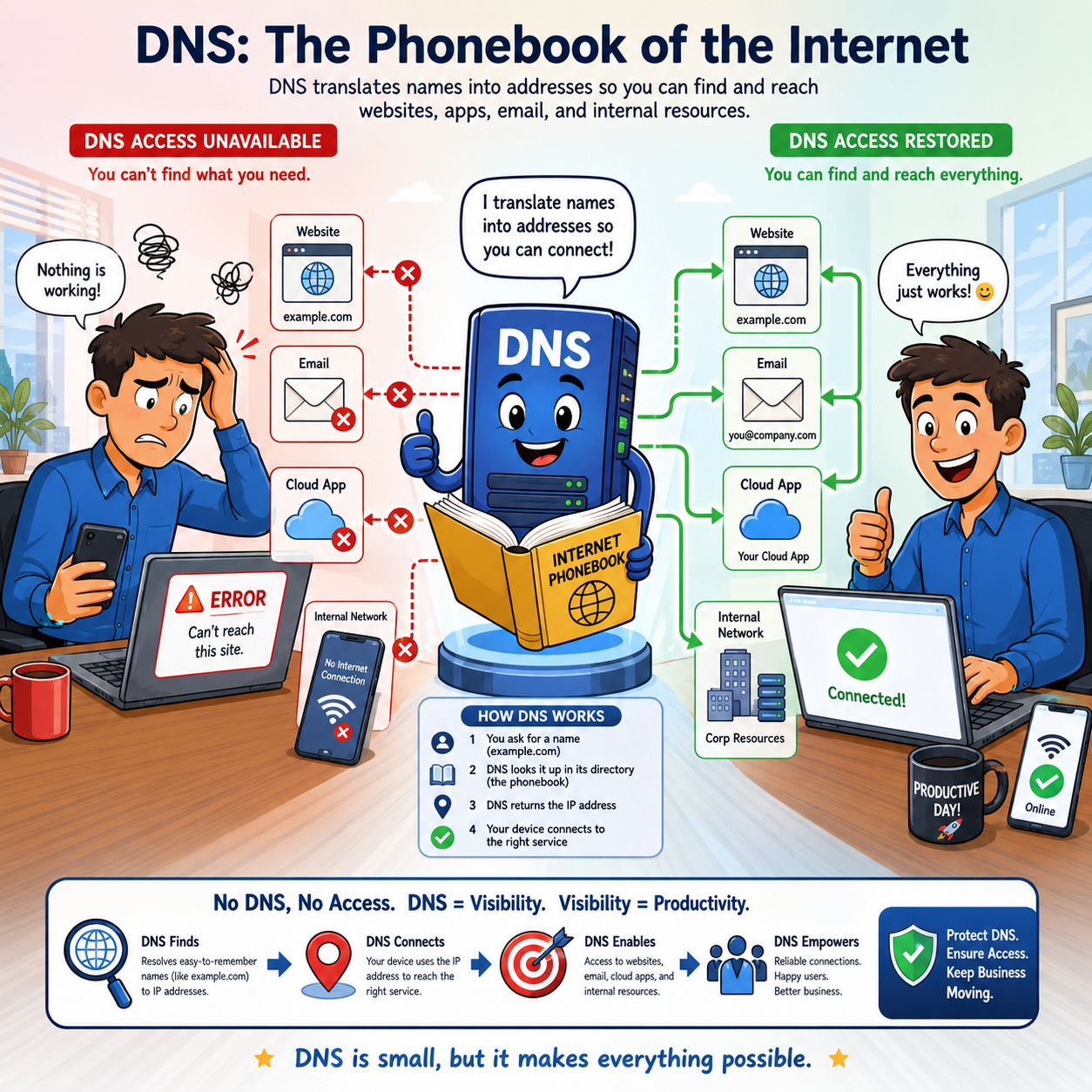
DNS is like the phonebook of the internet. It translates human-readable domain names (like yourcompany.com) into IP addresses that computers use to find and connect with each other. Without DNS, services like:
- Your website
- Your email (e.g. Microsoft 365 or Google Workspace)
- Cloud platforms (accounting, job management)
- Internal tools hosted remotely
- Phone systems, Mailing lists and photo copiers.
…all stop working.
The Risks of Not Having DNS Access
When you don’t have control of your DNS, you’re putting your business at risk in several ways:
- Locked Out of Your Own Services
If a former provider or employee controls your DNS and becomes unresponsive—or worse, hostile—you may lose access to critical systems like email, web hosting, or online applications. Essentially you get locked out of some company assets. - Lack of future options
Without access to your DNS, you may not be able to implement an SSL certificate, start a new email service or migrate to the new cloud application. - Slow Incident Response
If something goes wrong (e.g., your website goes down or your emails stop delivering), delays in accessing DNS can significantly increase downtime. Being able to identify problems and make quick changes to DNS records is essential in an outage. - Complicated Migrations
Moving email providers, hosting platforms, or phone systems often requires DNS changes. Without access, migrations get delayed, disrupted, or abandoned. - Security Vulnerabilities
You may not even know who has access to your DNS. This leaves your domain—and by extension, your business—open to hijacking or unauthorised changes. For example, your domain name could be pointed to the website of your competitor. - Loss of Ownership
Your domain name is a digital asset. If you can’t access or control your DNS, you don’t fully own one of your business’s most important identifiers.
Best Practices for DNS Management
- Know who your DNS provider is (e.g., GoDaddy, Cloudflare, GroupSupport, Netregistry, etc.)
- Ensure your business—not an individual or third party—is the registered owner of the domain
- Document login credentials securely and restrict access to authorised personnel
- Audit your DNS records periodically to remove old, unused entries that could be exploited
- Work with a trusted IT partner, if all of this seems like jargon or gibberish ensure you have a trusted IT partner that is looking after your DNS and that you know who they are & how to contact them.
Final Thoughts
Access to your DNS is not just a technical detail—it’s a vital part of your business continuity and digital security. Don’t wait for a crisis to discover you’re locked out or reliant on someone who’s no longer available.
Make DNS access a priority in your IT governance. You’ll be protecting your website, email, brand, and bottom line.
If you’re unsure who controls your domain or how to access it, reach out—we’re here to help you regain control and secure your digital infrastructure.
GroupSupport – IT for business. 08 9277 1768