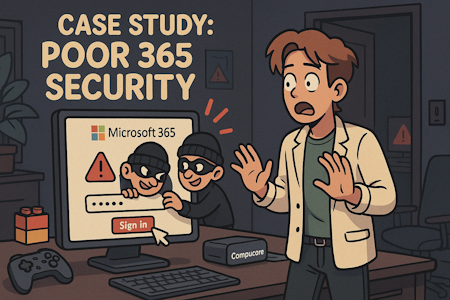
Case Study – when to move to Managed Services.
Recently a relatively new client approached GroupSupport to see what could be done to reduce the time burden currently placed on a senior staff member. Lets call him Tim.
The story is a common one. Tim had been employed to fill a role that he didn’t have time for, because he’d become the IT help desk for his colleagues. A tech savvy operator, Tim ended up spending nearly 80% of his time answering queries, managing and monitoring tech.
The problem was the business was having problems with workflow and client satisfaction because Tim wasn’t contributing enough to his role.

The business owner knew it was a problem, but didn’t know how expensive it would be or how it would work – and had put off doing anything because he wasn’t sure how to proceed. What the business owner had also failed to acknowledge was the double headed risk that if Tim left the organisation or went on leave, the business would effectively be 2 employees down (one IT + one Tims role).
Investigating and documenting the work that Tim was doing showed it as not only ad hoc support work, but also actively maintaining and upgrading systems and applications as well as troubleshooting deeper ongoing issues. Ultimately the recommendation was to consider managed services with all systems, applications, maintenance, ad hoc support and machine lifecycle being outsourced to a dedicated IT provider.
GroupSupport took over management of this clients IT services with several positive outcomes.
- The cost of maintaining and running IT was less than the business owner feared.
- The cost was well below 80% of Tims wage (what it was costing in Tim’s time to manage the IT in house).
- The client’s productivity increased because Tim was back in his role
- Tim was happier dealing with clients and his “real” work
- The client’s customers experience improved because the additional resourcing decreased wait times and sped up response rates.
- The cyber security aspect of the IT within the business was in a much healthier state
- Which meant the insurance premium didn’t increase
- The business risk of Tim going on leave was reduced to just his role
- The business productivity increased because staff had ready access to experienced IT support.
At a certain point managing IT in-house without a dedicated IT staff member becomes a game of diminishing value. It is worth regularly reviewing the costs, risks and financials periodically with an experienced professional to see if you wouldn’t be better off letting someone else handle your IT.
The client in this situation wishes they had taken this step sooner – happier staff, happier clients and making more money.